
A psychologist for Ukrainians in the UK: finding your soulmate in a foreign country
The UK has accepted over 200,000 Ukrainians since the full-scale invasion began. This is a huge number of people, each experiencing their own version of emigration.
Some arrived with children and without any knowledge of English. Some arrived alone, without relatives nearby. Some had been in London or Manchester for several years and thought they had adapted, but something inside still felt off.
If you’re reading this article, you’re likely looking for someone to say, “I’m having a hard time.” In your native language. Without an explanation of what Kherson is, why “just go back” isn’t an option, and what it means to live between two worlds. I’m here. I understand. Because I’m exactly the same.
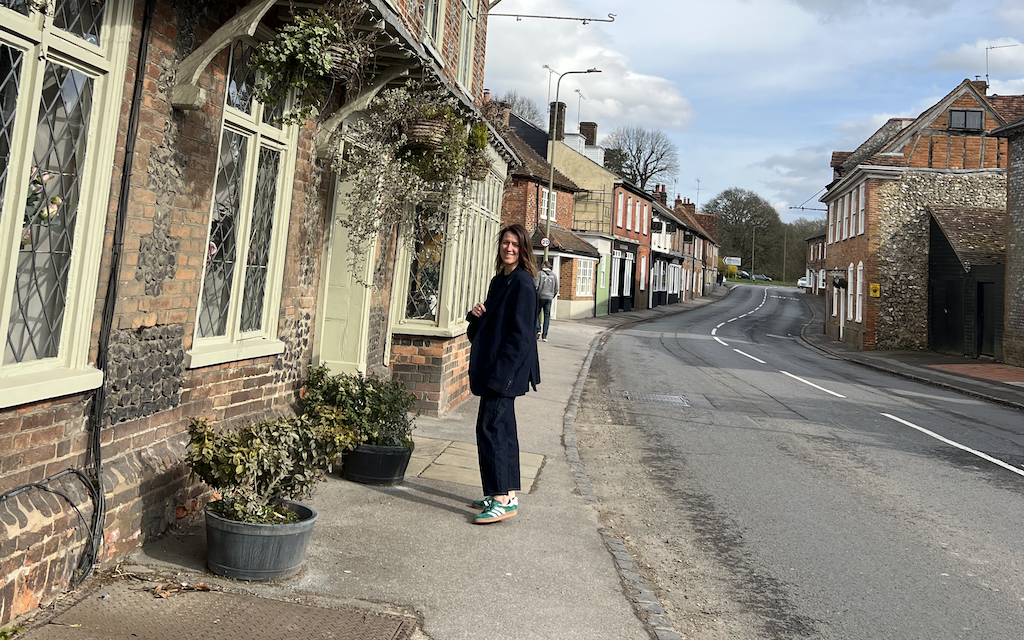
Why is it so difficult to find a psychologist in the UK?
The British healthcare system is one of the most advanced in the world. But for Ukrainians, it often proves a labyrinthine process.
- NHS and waiting lists. Free psychological care through the NHS exists, but waiting lists can range from several months to a year or more. You also need a GP referral, an understanding of the system, and confidence in your English.
- Language barrier. Communicating deep emotions in a second language is challenging.
- A cultural gap. A British therapist may be excellent, but they don’t know what it’s like to be “forced to leave.” They don’t understand survivor’s guilt. They don’t understand why “going back” isn’t a simple solution. You have to explain the context from scratch, and it’s exhausting.
- The feeling of “not having the right.” “There’s free help here, I can’t waste money on a private psychologist.” “Others have it worse.” “I have to cope.” These opinions are also part of the problem, not the solution.
This is why so many Ukrainians in the UK live for years with a condition that could be alleviated if they found a psychologist.
Запись на консультациюWhat’s happening to Ukrainians in Britain?
Over several years of practice, I’ve heard the same themes from clients in the UK. And I want to say that we’re all in this boat of emigration. Here are the most common obsessive thoughts of Ukrainians in exile:
“I thought I could handle it. I couldn’t.”
The first few months were fueled by adrenaline. I had to get settled, fill out paperwork, find a school for my child, figure out how transportation worked, navigate the benefits system. There was no time to feel—I had to do. And then things settled down. And then came the emptiness, the fatigue, the tears for no reason, the feeling of “why is this all happening?” This is a normal reaction. The psyche “unfreezes”—and everything that hadn’t had time to come out before comes out.
“I’m ashamed that this is hard for me.”
You think, “I’m in a safe country, I have a roof over my head and food, so how can I complain?” Survivor guilt is one of the most common and devastating experiences Ukrainians face abroad. It literally prohibits them from seeking help. But your pain is real! No matter where you are geographically. Emigration, even to a safe country, even with favorable conditions, is traumatic. And it deserves attention.
“I don’t know who I am here.”
At home, you had a profession, status, social circle, an understanding of “where I belong in this world.” Here, everything needs to be rebuilt. And while you’re building, you live in limbo. Who am I—a Ukrainian or a British resident? A mother or a professional? Someone waiting for a return, or someone building a new one? These questions don’t have quick answers—but they require space. Psychotherapy is that safe place.
“It has become more difficult with my husband/partner.”
Emigration is always a serious challenge for couples. Some adapt faster, others slower. Arguments, tension, and recriminations are not good for a couple’s relationship. And if you live long distances, with one person staying home and the other moving to another country, it becomes a truly difficult ordeal.
“The children have changed – and I don’t know what to do.”
Children adapt to new environments differently than adults. Sometimes better, sometimes harder. But parents see the changes and don’t know how to react. I don’t work with children, but I do work with parents who are worried about their children.
My YouTube channel
What am I working with?
- The most common topics among UK clients are:
- Anxiety and uncertainty – what happens next as a chronic condition
- Depression and apathy – when adaptation has taken all your strength
- Survivor’s guilt – “I can’t complain”
- Identity crisis – “Who am I here and why is all this?”
- Relationships under the pressure of emigration – couples, family, distance
- Imposter syndrome – “At home I was somebody, here I’m nobody”
- Psychosomatics – symptoms that appeared after moving
- ADHD in Adults: Support for Those Whose Brains Require a Special Approach
- Burnout comes from the role of the “strong one” who carries everything on her own
How does it work in practice?
Step 1 Write to me on Telegram or WhatsApp. Briefly—where you’re from, what’s bothering you, what time is convenient. No long questionnaires.
Step 2. First meeting. Introductory session – introduction, your request, and my approach. You’ll get a feel for whether I’m a good fit for you. No obligations.
Step 3. Regular work. Once a week, 50 minutes, Zoom. A stable point in your week – where you can take a breather and be yourself.
Step 4. Payment – bank transfer in hryvnia or pounds sterling – whichever is more convenient for you.
Frequently Asked Questions
- Can I use free NHS care and still come to you?
- Yes, there are no contraindications. But NHS therapy is most often conducted in English and with British therapists—that’s exactly what we were talking about. Working alongside a Ukrainian-speaking specialist provides another level of depth.
- I’m not sure yet that I need therapy. Maybe just talk? The first meeting is exactly that: “just talk.” You don’t decide anything in advance. Come and see if it resonates.
- I don’t have a specific problem. It’s just hard. That’s enough. “It’s just hard” is already a request. And a very honest one.
- Is it confidential? Yes, completely. Confidentiality is the foundation of the therapeutic relationship. Zoom’s encryption protects our conversation technically.
- Are there discounts for those facing financial hardship? I have one or two social work positions available in my practice. Let me know – we’ll discuss it individually.
My articles about emigration


A quick test: Do you need support now?
Note what resonates:
– I cry often, or, conversely, I can’t cry, even though I want to
– I’m constantly tired, even if I haven’t done anything
– I have a hard time enjoying myself, even good things
– I feel lonely, even when I’m around people
– I constantly think about those left behind, and I can’t switch off
– I’m angry at myself for not coping
– I don’t understand who I am here and why all this is happening
If you checked three or more, this is a sign that you should talk to a professional. Not “when it gets really bad.” Now.
You’ve already done the hardest part.
You’ve left. You’ve settled into a new life. You’re holding on—often without support, without family nearby, without knowing when this will all end. It’s a lot of work. And you deserve support. Writing to me isn’t giving up. It’s the next sensible step.
Message me on Telegram →
Message me on WhatsApp →
I’ll respond within a day. I’m waiting for you.
Why is it important to consult a Ukrainian psychologist?
I live in England myself. And I know this experience, not from books. I know what Britain looks like through the eyes of someone who came from another reality. I know what it’s like to fit into a new culture without losing yourself. I know what you can sound like when you’re tired and just want to speak your language. When you come to me, you don’t need context. You can just be yourself.
Sessions are held:
- In Ukrainian or Russian
— Online via Zoom
— In your preferred time zone (I’m in the UK, so we can easily arrange this) - Tuesday, Wednesday, Thursday, Sunday
Wherever you are – London, Manchester, Birmingham, Edinburgh, Bristol, Leeds, or any other city – we can meet online.
Read also
- A Psychologist for Ukrainians in Exile – a general article on the psychology of emigration
- Imposter syndrome in exile: “At home I was somebody, here I’m nobody”
- Apathy and “I don’t want anything” when I have no more strength
- Relationships and attachment – a couple under pressure from emigration
This article was written by Gestalt psychotherapist Natasha Kokhan, a member of the National Academy of Technical Sciences (Ukraine) and the General Practitioner of Therapy (GPTI) (UK). She lives and practices in the UK.